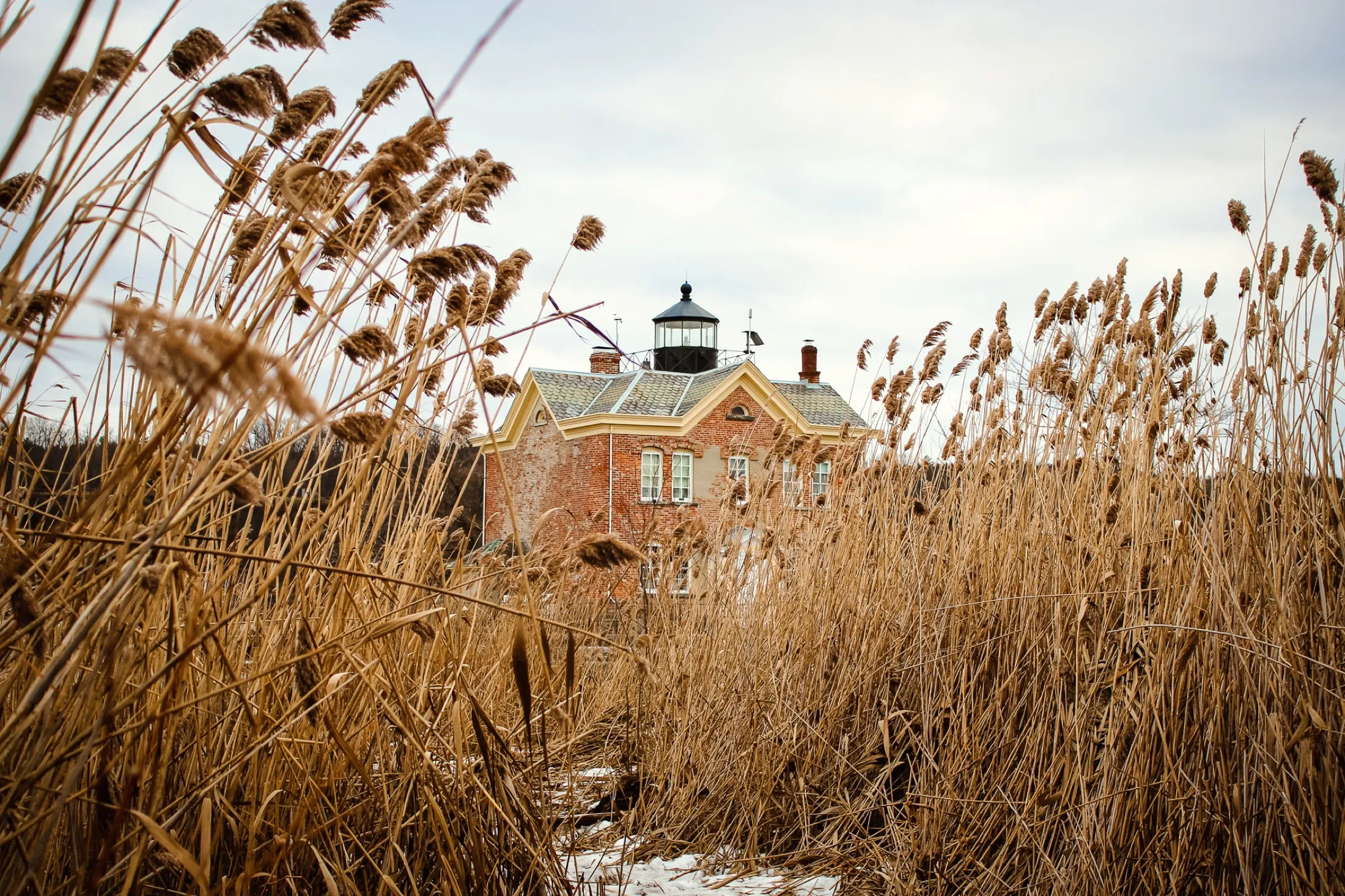
A brick keeper’s house at the mouth of Esopus Creek, still lit, with two bedrooms upstairs and a half-mile walk in that the river closes twice a day.
Most historic lighthouses have been converted into something: a gift shop, a viewing platform, a photograph you take from a car park. Saugerties has been converted into what it already was — somewhere people live. The light went up in 1869 to steer boats off the shallows and into the creek, and it is still an aid to navigation. The difference is that the keeper’s quarters now take guests, and the tower is open to whoever booked.
The walk is the part that changes the trip. From a small parking area near the Coast Guard station, a gentle half-mile trail runs out to the point through the Ruth Reynolds Clunt Nature Preserve. The Hudson is tidal all the way to Troy, and at high water it puts parts of that path under. The Conservancy links a tide table from its own pages and tells you to plan around it, which turns arrival into something you schedule rather than something you do. It is a rare thing to be given a timetable by a river.
Upstairs there are two bedrooms, each with a double bed, and the important detail is that they are not rented separately. One party takes the whole lighthouse. Cots can be added for two more; breakfast is included; the sitting room downstairs has binoculars, cards and books, and the museum floor keeps a Fresnel lens. The Bed & Breakfast runs Thursday through Sunday nights, year-round.
The honest caveats are the ones the lighthouse itself is upfront about. The Wi-Fi is described by the operators as intermittent and weak, which is either the flaw or the entire point depending on why you came. There is a mini-fridge and a propane grill rather than a kitchen. Booking runs months ahead. And the tide does not negotiate: if you mistime the walk out, you wait, and if you mistime the walk back, you wait longer.
What it is really selling is a constraint. You cannot drive up, you cannot check in whenever you like, and you cannot leave on a whim — and a building that has spent 157 years telling boats where the shallow water is has earned the right to make you plan around it.