On the night of 14 April 1912 a wireless operator on the southeastern corner of Prince Edward Island copied a distress call from a ship in the North Atlantic. He was the first person in Canada to read it.
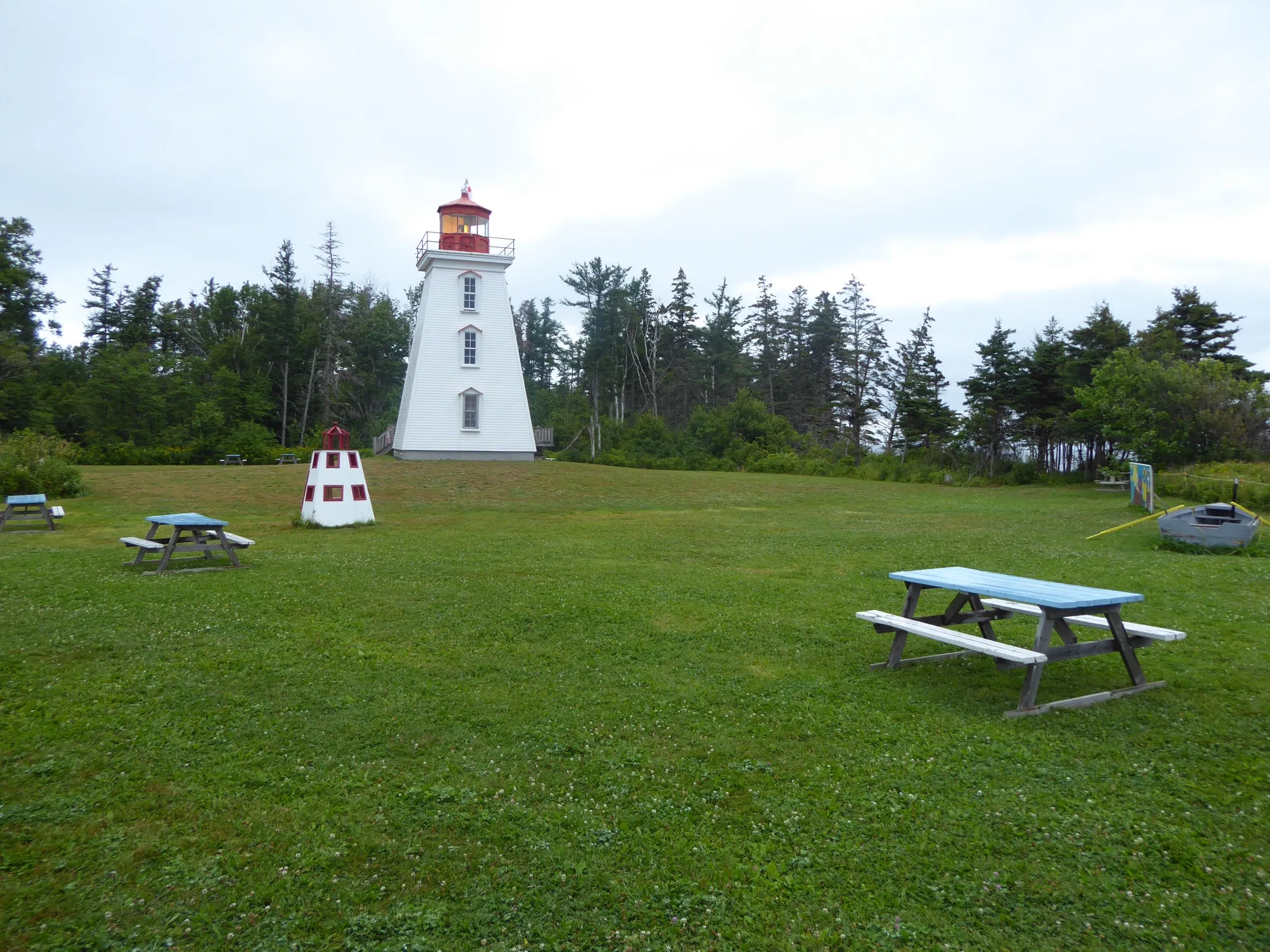
The lighthouse came first. Cape Bear has been lit since 1881 and is still an active aid to navigation; its light carries 22 kilometres, about fourteen miles, out over the Northumberland Strait toward Nova Scotia. It is a white shingled tower that tapers as it rises, with a red lantern room on top and a small keeper’s building beside it, standing on cut grass at the edge of the spruce.
The Marconi station arrived later and is why the place is on any list at all. Wireless was new, coastal stations were being planted along the seaboard, and Cape Bear was one of them. Thomas Bartlett was the operator on shift on the night of 14 April 1912, and the call he took off the air — the Titanic, going down off Newfoundland, which was not yet part of Canada — reached Canadian soil here before it reached anywhere else. The station kept working until 1922, when the operation was moved to Charlottetown. The building itself survives as a private family home.
What the site does with that is better than a plaque. The tower is a museum with exhibits on each floor, and you climb through them to the lantern room: the strait on three sides, Nova Scotia across the water, and, on a clear day, exactly the horizon Bartlett could not see anything on. Secondary accounts describe a display room built around period wireless equipment including the station’s original desk, plus a recording re-enacting the moment the message came in; the site’s own pages don’t itemise the exhibits, so treat that as reported rather than promised.
Practicalities are refreshingly small. Adults $5, children $3, a family of four or more $10, tax included. Open 10 a.m. to 6 p.m., seven days a week in season — the phone line is seasonal, so ring 902-962-2917 before a shoulder-month trip. It sits about 25 kilometres from the Wood Islands ferry, which makes it a detour on the way off the island rather than a day you have to build.
Two ordinary buildings on a headland, one of which was briefly the closest thing North America had to a witness.