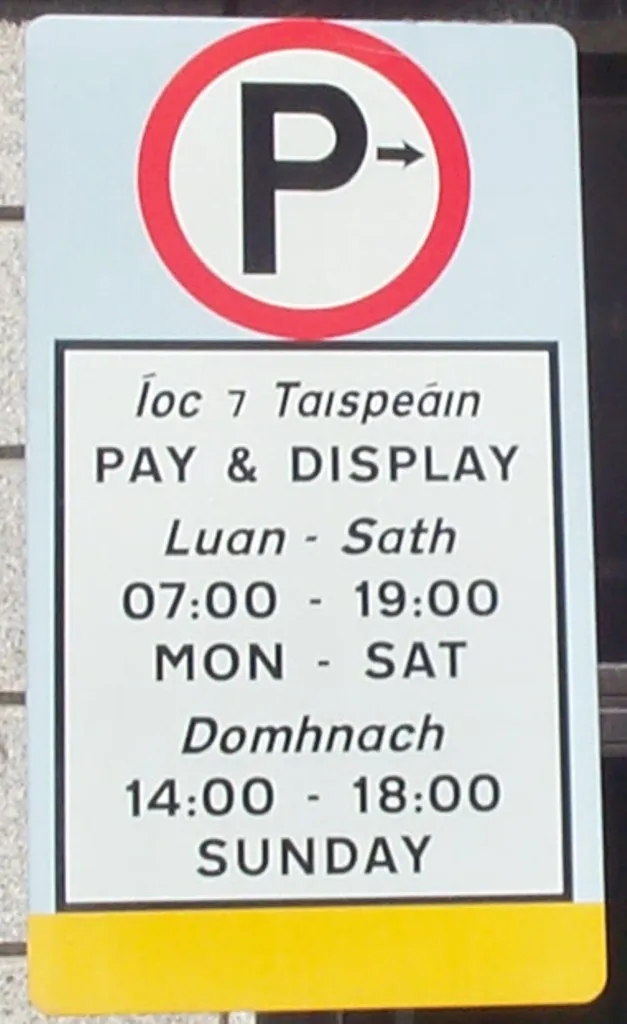
A shorthand of roughly 4,000 signs, built by Cicero’s secretary so he could take dictation at speaking speed. It ran for seventeen centuries and then died — except for one character, which is on the parking signs in Dublin and in Unicode at U+204A.
Marcus Tullius Tiro was Cicero’s secretary and, for most of his working life, Cicero’s slave; he was freed and kept the job. To keep up with a man who talked for a living, he built a system of abbreviations — one mark per common word, ending or phrase — that Plutarch says was first used on government business in 63 BC, during the Senate debate on the Catilinarian conspiracy. Historians reasonably suspect he had been developing it since around 75 BC for private correspondence. About 4,000 signs, learned by heart.
The attribution is not unanimous: Dio Cassius gives the invention to Maecenas; Isidore of Seville hands it to Ennius. The tradition that stuck is Tiro’s, which is why he is filed under “father of stenography” and the others are footnotes.
What happened next is the strange part. Other hands pushed the system to about 5,000 signs, and then Carolingian monasteries — where it was taught as a discipline — inflated it to somewhere around 13,000 or 14,000. A shorthand with fourteen thousand symbols is no longer a shorthand; it is a second language with worse ergonomics, and that is roughly why it faded. It hung on in scattered use into the 17th century and then stopped.
One sign refused. The Tironian et — ⁊ — stood for Latin et, “and”. It came into Old English, sat in medieval manuscripts, and then found a permanent job in Irish, where it does duty for agus, and in Scottish Gaelic. Which is why Dublin’s parking signs read Íoc ⁊ Taispeáin: pay and display, with a 2,000-year-old dictation mark doing the conjunction.
Look closely at that sign and you will notice it is not quite the right glyph. Signwriters and typesetters without the character have printed it as a figure 7 for generations, and people who need it in plain text often reach for the box-drawing ┐ instead. The real one has been in Unicode since well before either workaround stopped being necessary: U+204A, TIRONIAN SIGN ET. Your keyboard almost certainly won’t produce it, and your font almost certainly will render it — so you can paste a symbol invented to catch a speech about Catiline into a message about lunch.