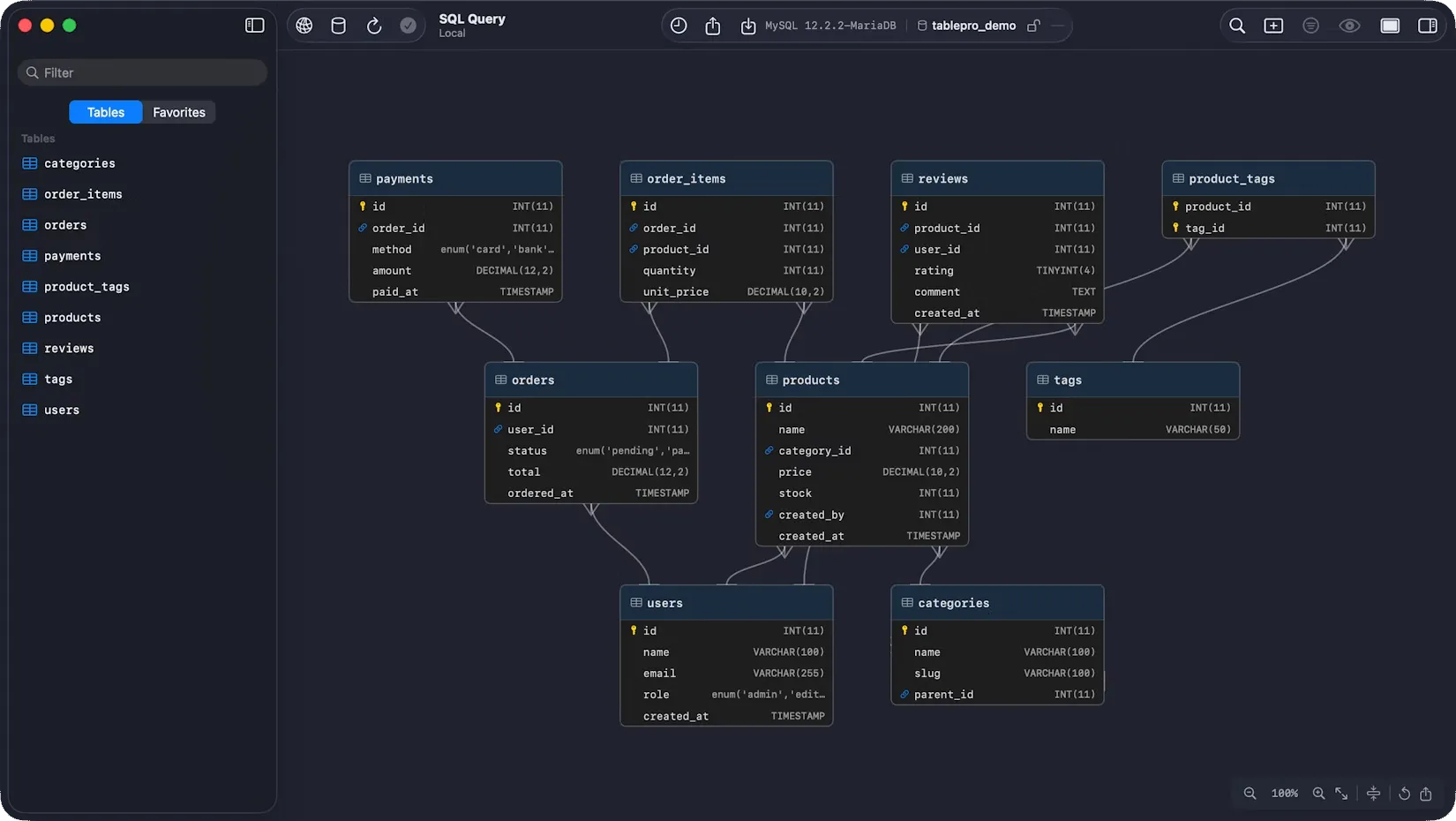
TablePro’s SQL editor running against the bundled Chinook sample database — connection pane on the left, results below.
The Mac-native database client that finally consolidates the eighteen engines a typical developer touches into a single window — and ships an MCP server so Claude or Copilot can drive it.
The macOS database-client landscape forces a compromise. TablePlus is polished but closed and paid. Sequel Ace is free and native but only speaks MySQL. DBeaver covers everything but is Java pretending to be a Mac app — startup latency, off-brand widgets, the works. None of them are open source in the way you can fork and fix.
TablePro is the missing native, free, open-source middle path. One window for Postgres, MySQL, SQLite, Redis, Mongo, ClickHouse, DuckDB, MSSQL, Cassandra, etcd, Cloudflare D1, DynamoDB, BigQuery, LibSQL, Oracle, and Redshift. The first six are bundled; the rest install on demand so the app stays small until you reach for them. Apple Silicon and Intel, macOS 14+, starts in under a second.
The MCP server is the angle that earns it a place on the desk now rather than next year. Point Claude Desktop, Cursor, or any MCP-aware client at TablePro and the same connection pool you’ve been using becomes a tool the model can drive — describe the schema, run the explain plan, sample a thousand rows, draft the migration. That development loop doesn’t exist with TablePlus or DBeaver. Inline AI suggestions and a chat pane wired to a Copilot subscription or any OpenAI-compatible key cover the case where you’d rather query the model directly.
Beyond the engines and the AI, the basics are honestly handled: SSH tunnels, ER diagrams, query history, undo/redo on cell edit, iCloud sync for connections and tabs across your Macs. A bundled Chinook sample database means you can poke at the UI without wiring anything up. The iPad and iPhone builds are in public TestFlight; a Linux build is in progress.
Honest limitations: five months old, the maintainer’s first big indie release, and the rough-edges list in the launch post is candid — features still landing, some engines more polished than others. AGPLv3 means if you fork it and ship a hosted service you owe your changes back; for a desktop user that’s invisible, for anyone planning to wrap it as SaaS that’s the whole catch.