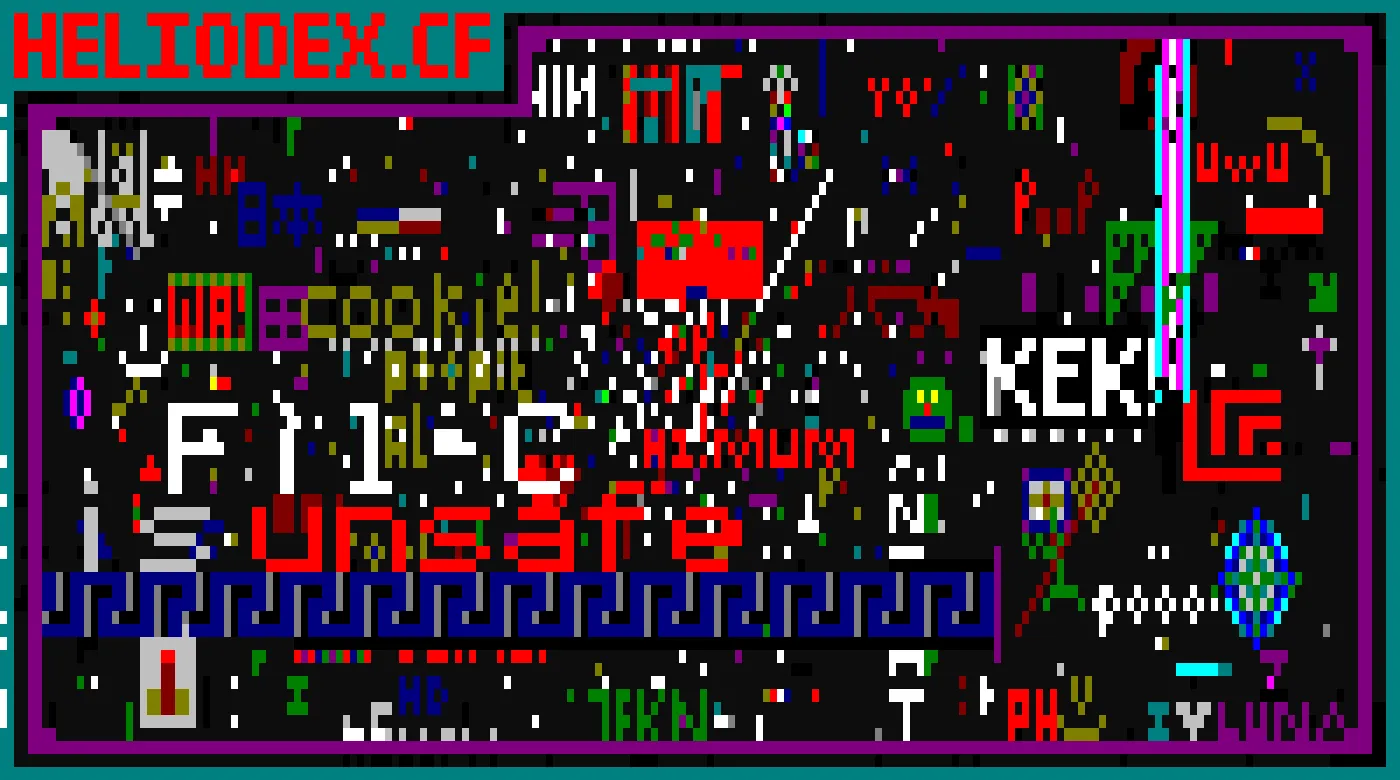
ssh ssh.placeand you are in — a 200×60 canvas shared by everyone connected right now, one block every fifteen seconds. The rule against writing text is the most interesting thing about it, because nobody obeys it.
There is no app to download and no account to make. Whatever SSH key you connect with, its fingerprint is who you are — that is the entire identity system, and it is also the rate limiter, because the fifteen-second cooldown is tied to the key rather than the session. Reconnecting does not reset it. Arrow keys, wasd or hjkl move the cursor, 0–9 pick from sixteen colours, space puts a block down. The canvas is 200 columns wide and your terminal is not, so the view pans as you go.
The one rule is that you cannot write. The server refuses any input containing a character; you can place solid colour and nothing else. “Draw something instead,” the page says. What people do instead, of course, is draw letters — the canvas as it stands is dense with blocky hand-built lettering, arguments about whether some piece of software is unsafe, a Greek-key border somebody laid down one pixel at a time. The restriction did not stop text. It just made text expensive, which turns out to be a different and better thing: every word up there cost somebody fifteen seconds per block.
The stats page is worth the click on its own — live counts of who is connected, how much of the 12,000 cells is filled, and a palette breakdown by share. Teal leads at 17%. Lime, at the time of writing, has two cells in the entire canvas.
It is about 5,400 cells drawn out of 12,000, roughly 45% full, and the canvas survives server restarts even though the placement counter does not. Written in Go, MIT-licensed, and you can run your own. The author’s README is the honest version and worth quoting: “I built this because the idea was funny, not because anyone needed it. It works, but expect rough edges.”