One cinema chain kept its posters instead of pulping them. Five thousand of the survivors are now online, free, at a resolution you could print.
The Harry Ransom Center at UT Austin holds upwards of ten thousand movie posters; five thousand of them are catalogued, photographed and browsable right now. The bulk arrived from one source — the Interstate Theatre Circuit, the exhibition company built by Karl Hoblitzelle.
Worth correcting, because the round version travels further than the true one: Interstate did not own nearly every cinema in Texas. It ran over 150 theatres in the state by the mid-1940s. That is the more interesting number, because 150 houses over five decades is a sample rather than a shrine — these are the sheets that actually went up in Texas lobbies, chosen by a booking department, not the ones a collector later decided were worth saving.
The range runs from the 1920s, when film was still fighting vaudeville for the same audience, to the 1970s and the arrival of the megaplex and the drive-in. Sizes go from a small window card to something the size of a billboard. Genres go everywhere a booking department had to go: musicals, epics, westerns, sword and sandal, horror, counterculture.
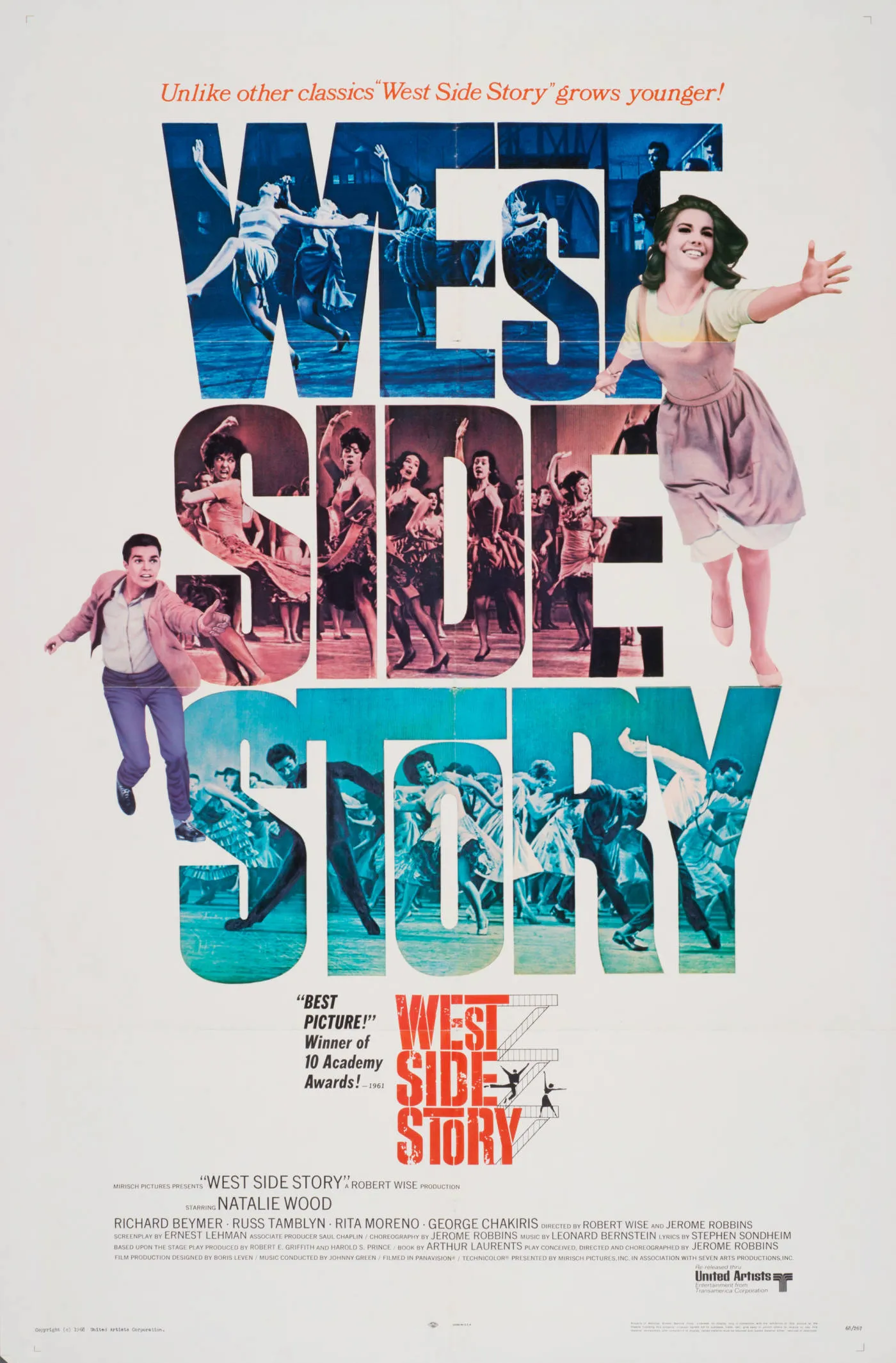
The 1950s and 60s run deepest, which is lucky, because that is where the lettering is. The West Side Story re-release one-sheet is the case for the whole archive in a single object — the title set enormous, each letterform cut out and filled with its own photograph of dancers mid-leap, and Natalie Wood running clean off the right-hand side of the type. Nobody would design that now; nobody could sell it now.
Downloads are free at Large and Extra Large. The same donation stream brought film stills, lobby cards and press books from the 1940s to the 1970s, which sit alongside it.
One honest limitation: this is a ContentDM installation, so it is a search box and a facet list rather than a designed gallery. You either arrive knowing a title, or you accept whatever the default sort hands you — which, given that the default sort produced The Shoemaker and the Elves and Mr. Superinvisible on the first screen, is arguably the correct way to use it.