Click the ticket taped inside a lit theatre marquee and pull down, and it tears free — one of 169 real stubs the maker has kept since 1999, each walked through a recreated lobby before it lands in a binder at home.
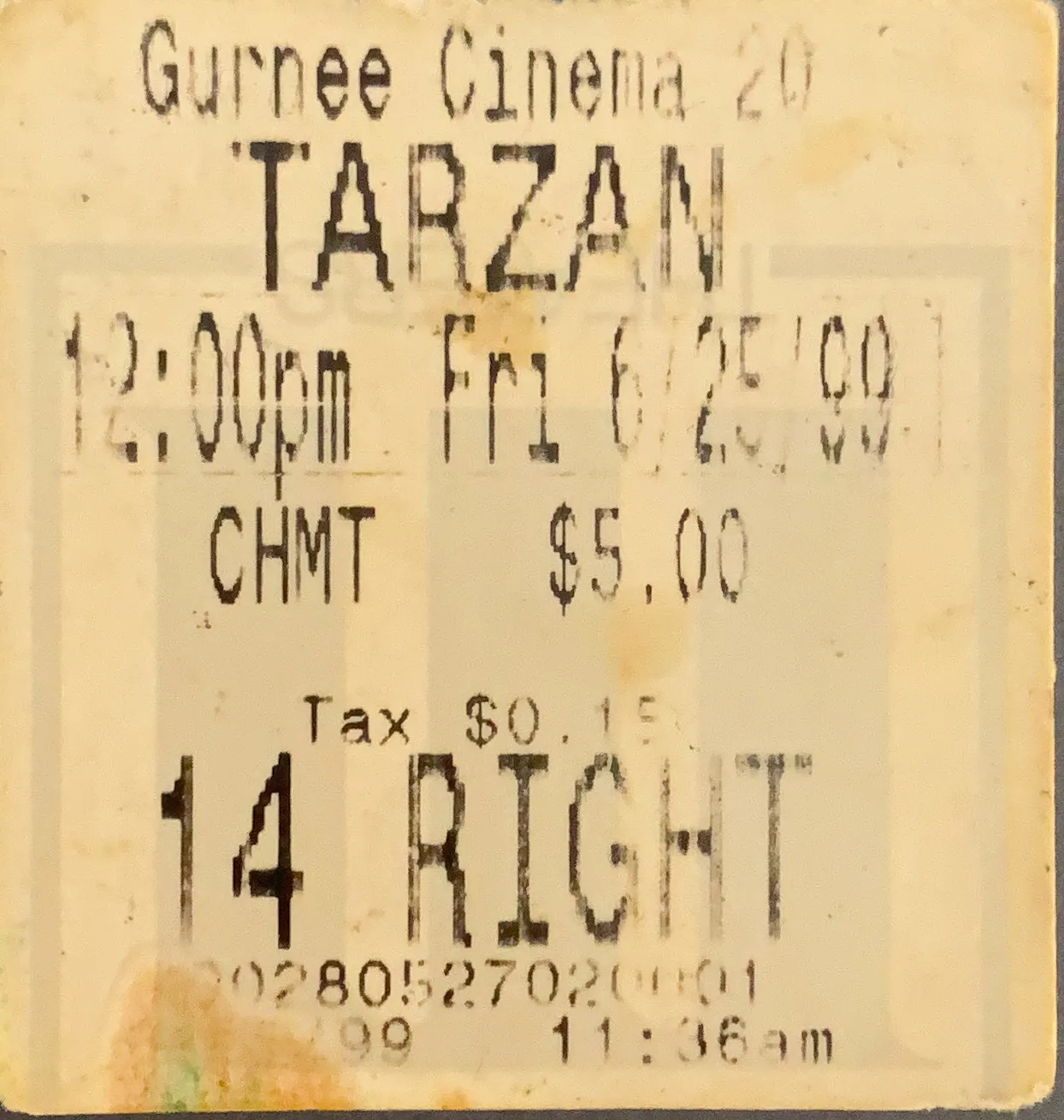
gardnermcintyre.com/stubs turns one person’s paper trail through 27 years of moviegoing into a three-act walk in Three.js instead of a spreadsheet. The site’s own data — 169 records, read directly rather than taken from the headline — runs from a Tarzan matinee on June 25, 1999 (Gurnee Cinema 20, seat 14 right, $5.00 plus 15 cents tax) to an Evil Dead screening on July 11, 2026. The “27 years” the find quoted holds almost to the week. Click the taped ticket and pull down: it tears with a handwritten note card giving the film, date, seat and price, then the scan rides into a binder sleeve in the closing scene, a bedroom built to that night’s actual hour of sky.
The find’s “recreates every theater” oversells it slightly. There’s one marquee model, not forty-one — a function in the code reads each ticket’s real theatre name off the record and typesets it onto the same glazed entrance, rope barrier and marquee bulbs every time. What does change per visit: four posters flanking the door, pulled from Wikipedia for whatever else was playing that week, and a second scene — a corridor with the actual auditorium’s lit screen sign — between the marquee and the binder.
The stubs themselves are the genuine paper, not recreations. The 1999 Tarzan ticket above is a photographed scan, coffee stain and dot-matrix print intact — and the maker’s own confidence field on the 169 records (120 high, 45 medium, 4 low) admits where a smudged date or a truncated title made a transcription a guess rather than a fact.
The scene needs a real GPU and a wide screen by design, not by oversight: anything under 600 pixels wide, or with a coarse pointer, never downloads Three.js at all and gets a plain swipeable reel of the same scans instead, with an on-page note explaining why.
The GitHub harness is more than published source — it’s a documented pipeline: a thumbnail builder, a script that scaffolds blank ticket records from a folder of scans, poster- and runtime-fetchers pinned to Node 22+, and a doc written to hand a scan and an empty record to a coding agent and have it read the ticket back. It’s a day old as of this writing, MIT-licensed, with no stars or issues yet — a genuine release, just one still untested outside its own author’s build.