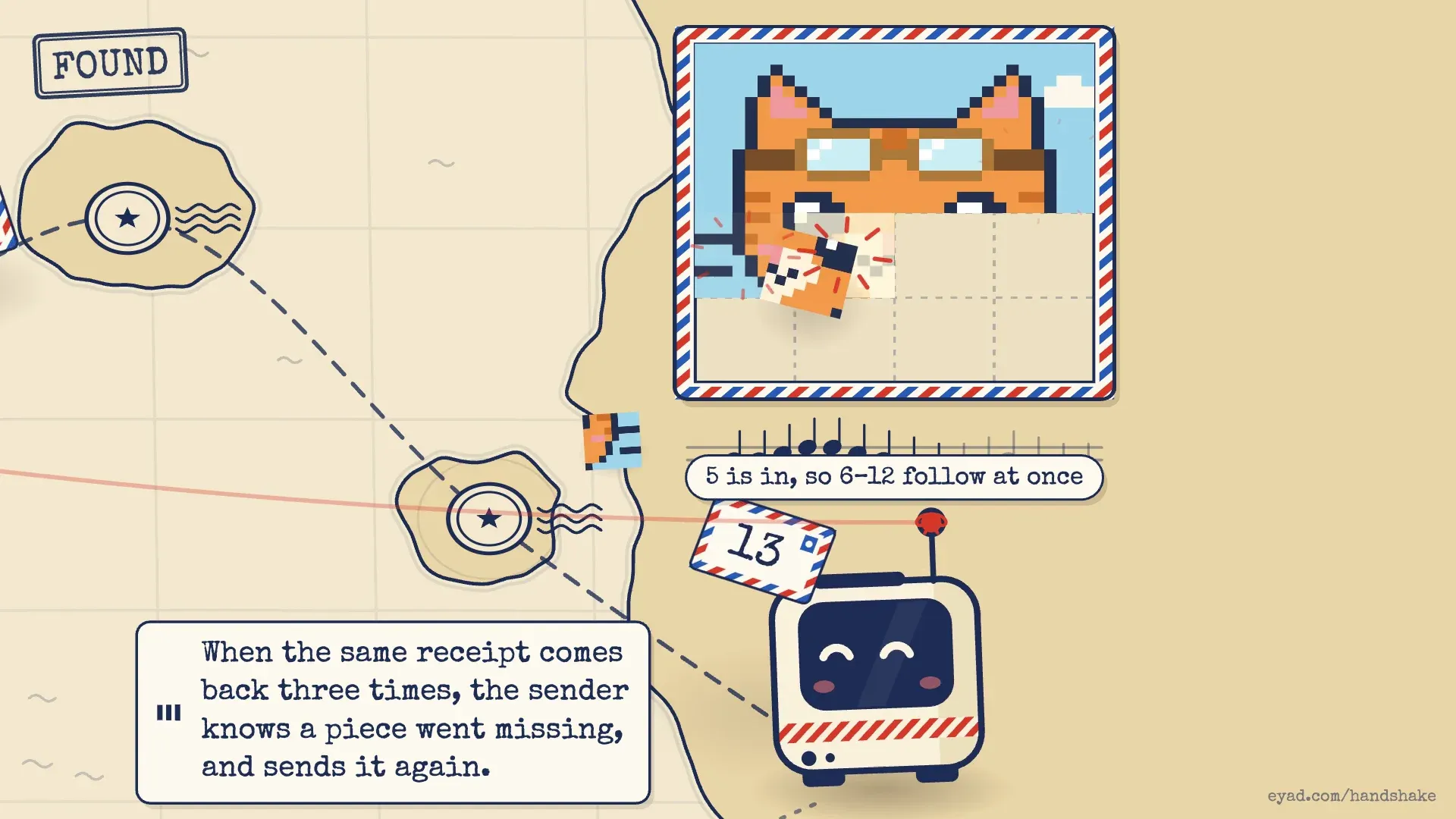
A still from the film: the receiver has caught the missing piece. Frame from the video at eyad.com, by Eyad Nour.
TCP as a postal service: numbered envelopes cross a map, one goes missing, and a repeated receipt is how the sender finds out. Then it hands you the weather.
The film opens on the finished picture, a pixel cat in aviator goggles, and asks how it got here whole when the internet loses pieces all the time. It rewinds, and the cat goes back out as numbered envelopes between two little machines. Piece 5 vanishes in a busy relay. The pieces behind it arrive anyway, and each makes the receiver send back the same receipt, naming the next piece it still needs. On the third identical receipt the sender knows, and resends piece 5. Once it lands, the receiver can release the held pieces at once and the picture completes. It is narrated, captioned by default, and has a scrubber, so you can skip to the part you want. It also ends on a joke, which is not spoiled here.
The playground is where it sticks. Swipe an envelope to knock it out of the sky, drag a slider from calm to storm, and watch a tally of sent, lost and resent pieces, plus elapsed time, climb until everything arrives. A button switches TCP off, so you can see what the same storm does without it. Or draw your own picture on a grid: each outlined square becomes one numbered piece. The result saves as a postcard or as a link that carries the drawing in the URL itself.
It is more than decoration. The film’s bad luck is scripted, but the rules behind it are real code, which the page’s JavaScript shows: three duplicate receipts trigger a fast resend, a timer catches the rest and waits longer after each failure, and the window of pieces in flight halves after a loss and grows back.
It is a teaching model, not a packet capture. The cat is 16 pieces, the window is capped small, and the real protocol’s selective acknowledgements and much else are left out, so it explains the idea, not the RFC. You need sound for the narration, though captions cover that. The credits page says it was directed by Eyad Nour and built with Claude Opus 5.5, with voices and sound from ElevenLabs. A video version is available to download.