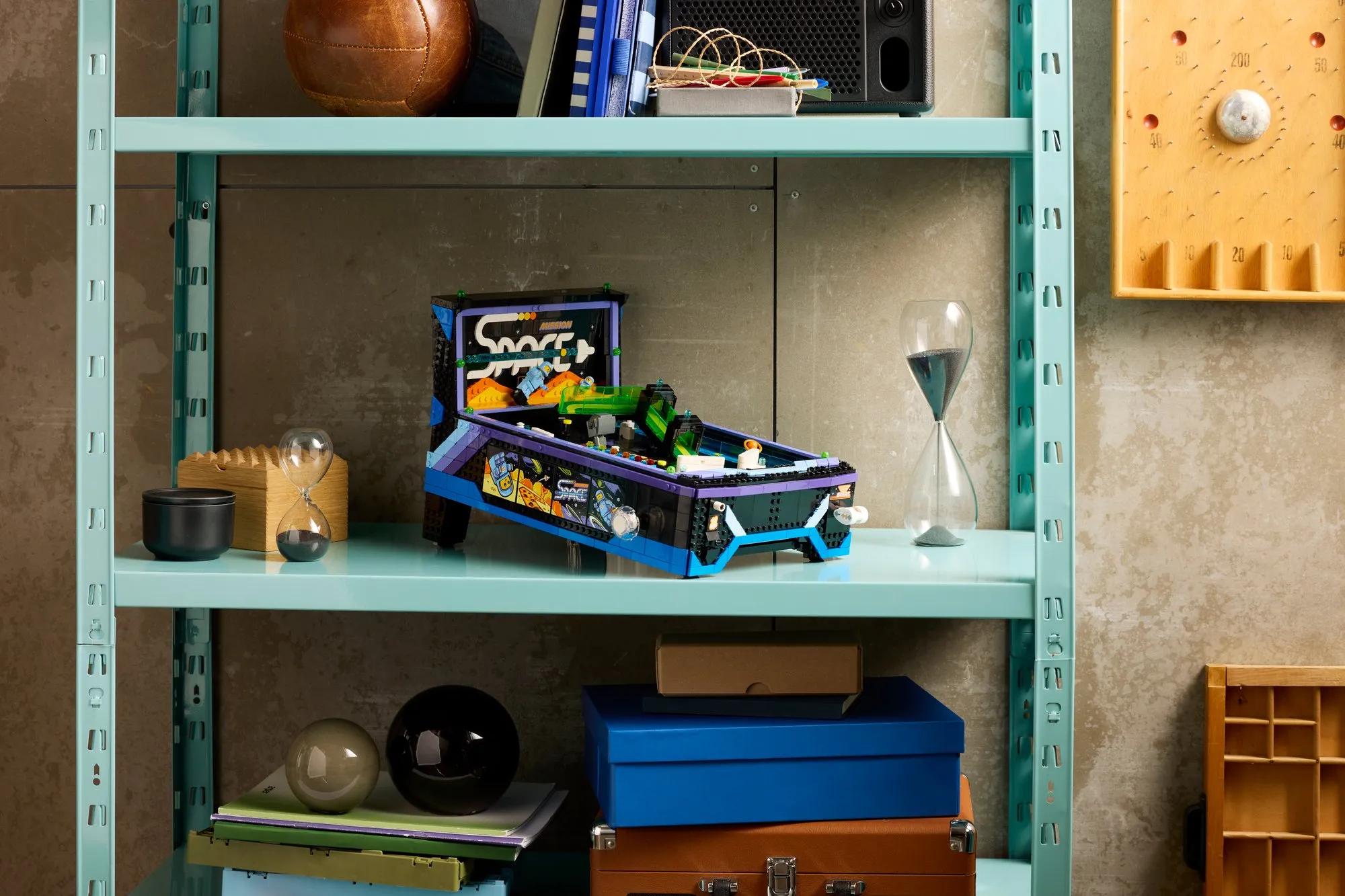
LEGO has made pinball-machine models before. This is the first one where the ball goes down the drain and you have to do something about it.
Set 11374 is 2,274 pieces, 18+, £189.99 / €209.99 / $229.99, and it has been on shelves since 4 July. It stands over 9.5 inches high, 15 inches long and 11 inches wide — desk furniture rather than shelf ornament, which matters for a thing you are meant to lean over.
The mechanism is the whole review. A spring-powered launcher fires the ball onto the playfield. Two flippers, worked from the cabinet sides, keep it up. There are spinning bumpers to bounce off and an up-and-over ramp bridge to aim at. None of that is a decorative approximation: the ball is real, gravity is real, and if you miss the flippers it is gone.
Around that sits an objective, which is the piece most working models skip. The mission is to reunite a Classic Space astronaut with a space-roving baby, achieved by hitting a key asteroid target, and progress is shown on an integrated bar built into the machine. The bar resets, so the next game starts clean. Two minifigures ship with it — the astronaut and the space baby — and the livery is straight 1978: blue and grey, yellow visors, the logo.
The honest limits are the ones physics imposes on a plastic playfield. There is no solenoid, no scoring electronics and no multiball; the flippers are as strong as your fingers and the bumpers are passive. A progress bar reset by hand is not a score, and if you have ever played a real machine the tactility will read as polite rather than violent. That is the trade for a mechanism made entirely of parts you can also use to build a castle.
What tips it over is that the build and the play are the same object. Most LEGO sets stop being interesting at the last brick; this one starts there, and the reason to keep it assembled is not display but the plunger.