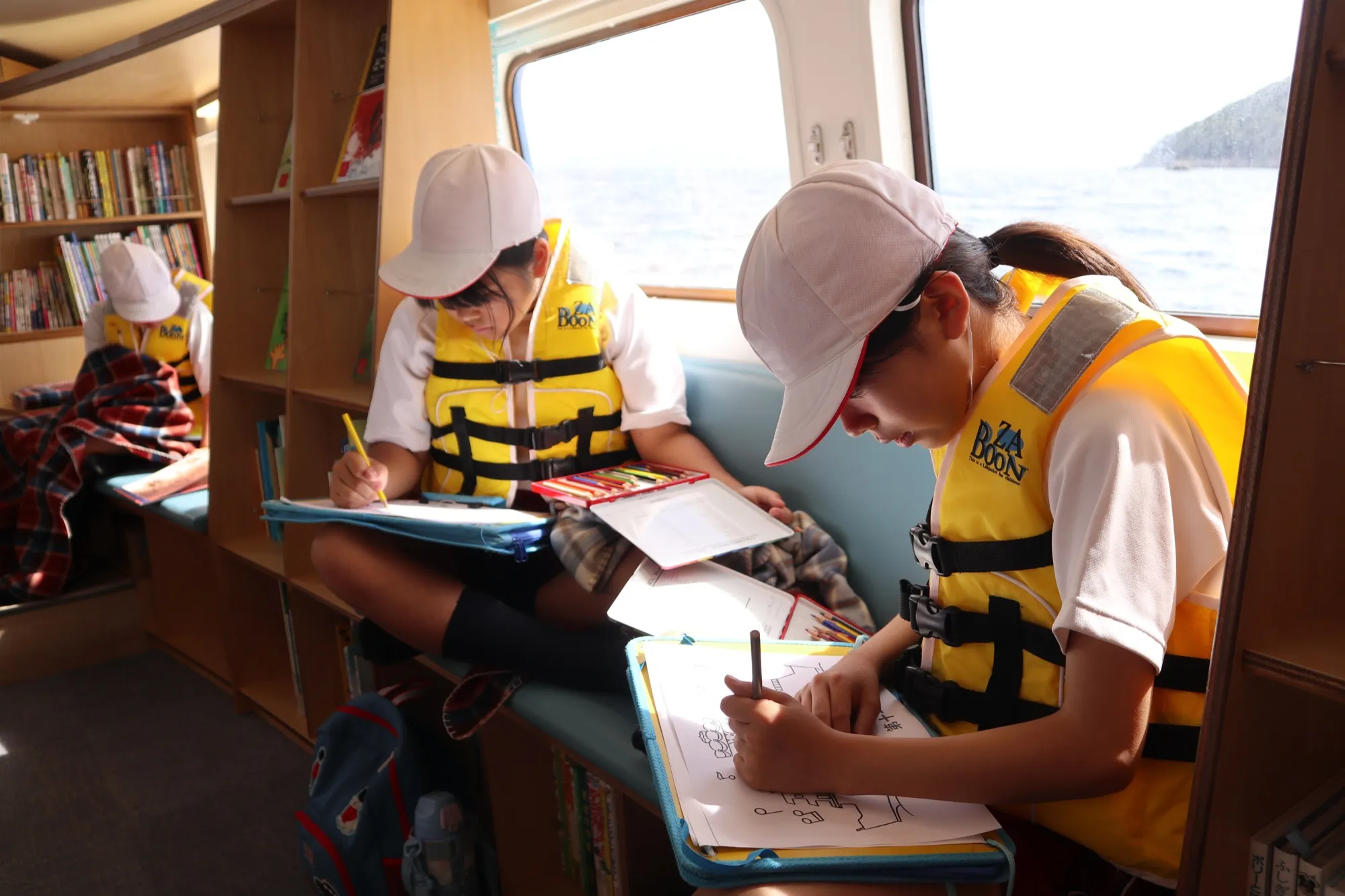
Aboard Hon no Mori-go off Ibukijima, from the ship’s own log of the day.
Tadao Ando’s office bought a 20-year-old Seto Inland Sea passenger boat, rebuilt it into a children’s library, and handed it to Kagawa Prefecture. It holds 2,000 books and twelve people, costs nothing to board, and is scheduled to sail for about five years.
Ando pitched the prefecture in May 2023: make memories in the Seto Inland Sea as a child and they become love of home as an adult, so “let’s do something that can only be done in Kagawa and the Seto Inland Sea.” His studio filed a formal offer of donation, bought a hull in November 2024, rebuilt it, and handed the finished ship over that March. Sailing since April 2025, it takes its name from the Kodomo Hon no Mori children’s libraries Ando has designed and given away in Osaka, Kobe, Tōno, Kumamoto and Matsuyama. This one is the first that moves.
The boat is small: 19 gross tons, roughly 20 metres by 4, cabin rated for twelve. It spent about twenty years working Seto Inland Sea passenger runs, every day, before the studio got hold of it. “We created reading spaces throughout the ship,” Ando says of the conversion. “A large circular bench was placed on the rear deck, and children can even lie under the sun. We tried to give them as much freedom as possible to choose both what they read and where.” Shoes come off at the deck. The 2,000 books are children’s books sorted into five themes, each hinged to the inland sea — living things, the world beyond the water, past and future, courage, play — and you may carry five off the ship, returning them to a drop box.
The reason it exists sits in the filing: the prefecture runs it out of its remote-islands and depopulation desk, on donated money, for the children of 24 inhabited islands. Weekdays the ship is a school bus with shelves — on 26 May it carried Shirakata Elementary from Tadotsu on a 90-minute cruise to Ibukijima, where the island’s pupils and preschoolers were waiting on the pier with a “Welcome to Ibuki” placard. Its calls also include Naoshima, Teshima, Ogijima and Megijima, the art islands the Setouchi Triennale made famous, where Ando’s own concrete museums already stand.
Getting aboard is the hard part, and the site is straight about it: the calendar comes out in seasonal batches, in Japanese, and most dates are school trips marked closed to the public. Family sailings are free but balloted — about 24 groups, one guardian per application, and you pay your own fare on the scheduled ferry out to the island, in cash. At a port festival anyone can board, in twenty-minute rotations of twelve, with under-12s counted as half a person. Everyone wears a life jacket. And the prefecture plans about five years of operation, having already published what will happen to the leftover donations when the run ends.