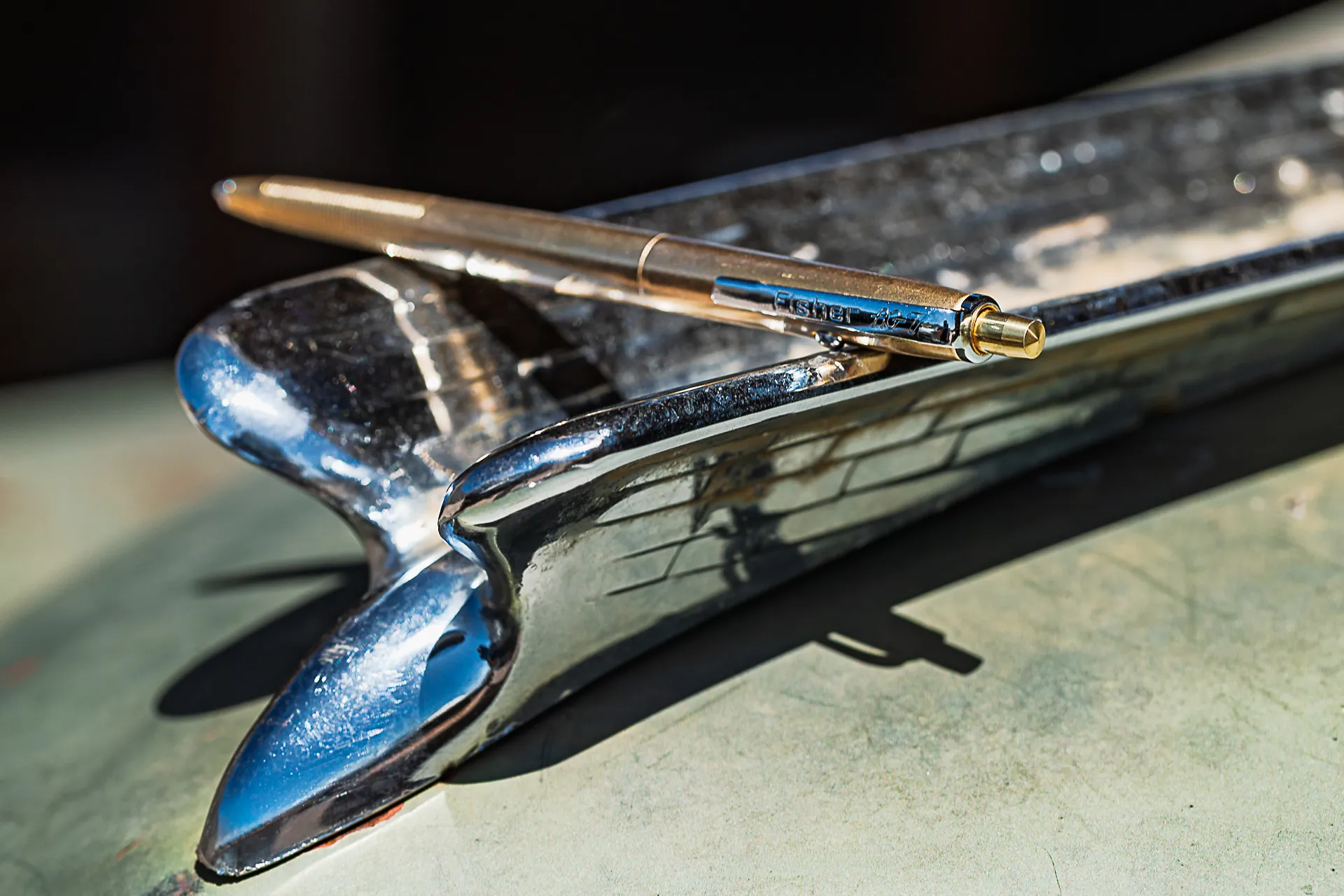
The famous story — NASA spent millions on a pen while the Russians just used a pencil — is wrong in every part. Paul Fisher spent his own million, NASA paid $2.39 a unit, and the Soviets bought a hundred of the same pens.
Fisher patented the pressurised cartridge in 1965 and offered it to NASA unsolicited; no agency money went into developing it. After roughly two years of testing, NASA ordered 400 — an Associated Press report from February 1968 put the price at $2.39 each, a 40 percent bulk discount off the $3.98 retail. A year later the Soviet Union bought 100 pens and 1,000 cartridges for Soyuz, at the same discount. The expensive writing instruments were the pencils: in 1965 NASA paid Houston’s Tycam Engineering $4,382.50 for 34 mechanical pencils — $128.89 apiece — and the outcry over that sent the agency looking for something cheaper.
Pencils were a hazard as well as an embarrassment. Graphite conducts electricity, and dust and snapped leads don’t fall in microgravity; they drift into ventilation and electronics. Wood shavings burn. Cosmonauts’ grease pencils shed peeled paper. The Apollo 1 fire in January 1967 landed mid-evaluation and made every loose flammable thing in a cabin urgent — though nobody documents a direct line from the fire to the pen order.
The mechanism is why it writes at any angle. A sealed cartridge pressurised with nitrogen to around 45 psi pushes thixotropic ink — a gel at rest that thins under the shear of the rolling tungsten carbide ball — so gravity never enters into it. Fisher rates the cartridge from −30°F to 250°F and claims a hundred-year shelf life; both are the company’s own figures. NASA’s qualification runs went further, testing cartridges from pure oxygen to vacuum.
What is new here is only the finish, and it is the honest kind. Fisher’s other brass pens are sold as lacquered brass or brass alloy; this one is bare metal with, in the company’s words, “no coatings” — so it fingerprints, blotches, and slowly darkens into something particular to whoever carries it. $84 direct from Fisher, machined and hand-tested in Boulder City, Nevada, where the company has been since 1976. It ships with the standard PR4 cartridge, black, medium point.
Two honest notes. Pressurised gel writes with more drag than an ordinary ballpoint — the ink is a paste, and it wants a firmer hand. And $84 buys the barrel, not the trick: the identical PR4 drops into a Bullet costing a third as much. You are paying for a brass tube that keeps a record of your hands.