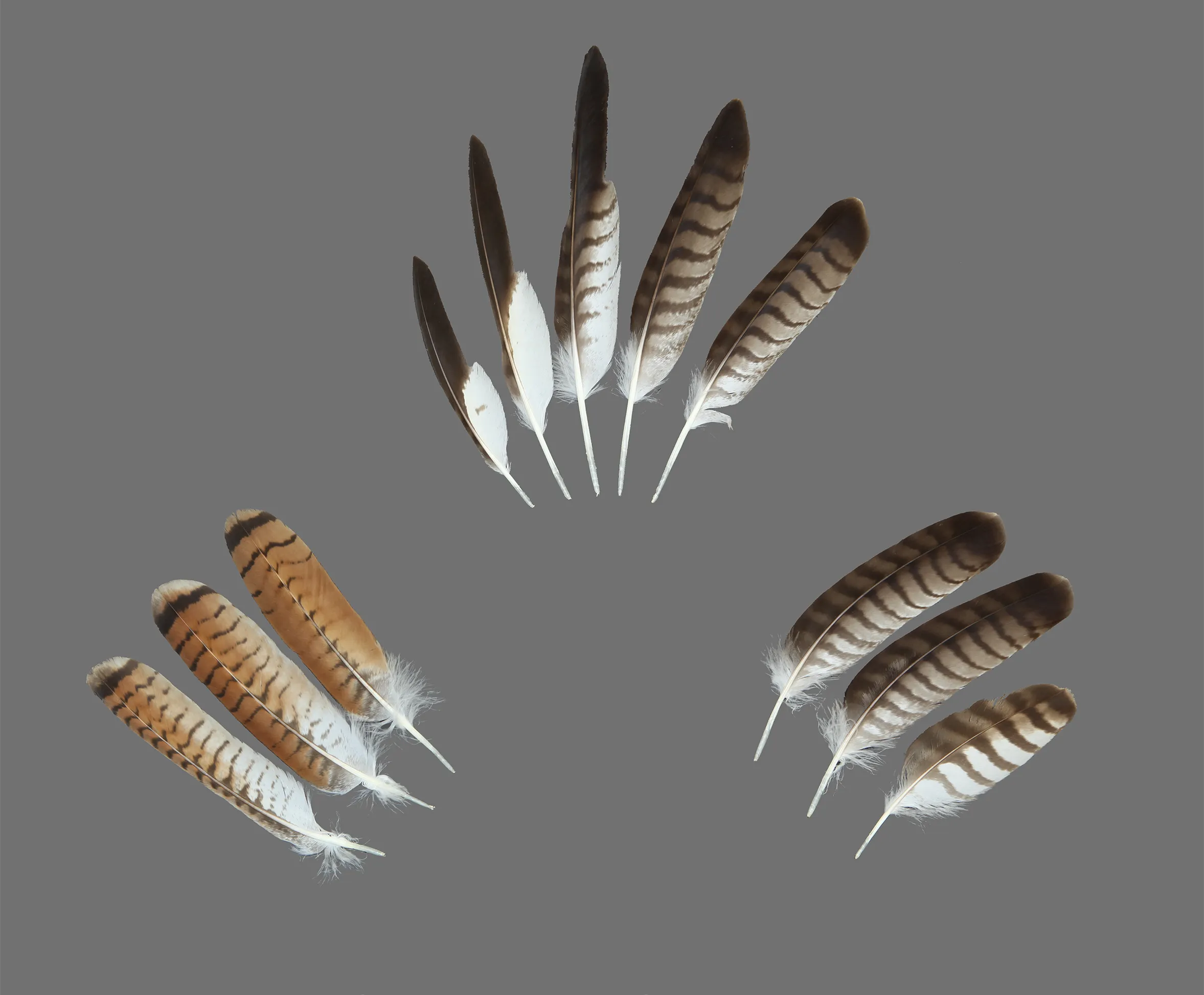
Ask an AI photo-identifier about a feather enough times, per the recommendation that surfaced this, and it will eventually call almost anything a wild turkey. The Feather Atlas skips the guess: describe the feather’s pattern, color, and size, and it matches you against real scans from a federal forensics lab’s own reference collection.
The identify tool is a five-step filter, not a search box: pattern (eight options — barred, mottled, spotted, iridescent, and more; a feather can match several), the single most characteristic color from ten choices, a size bracket by total length, which position it came from (primary, secondary, or tail), and, if you can guess it, one or more of eleven bird groups, waterfowl to owls to songbirds.
That collection belongs to the Clark R. Bavin National Fish and Wildlife Forensics Laboratory in Ashland, Oregon, dedicated in 1989 as the only laboratory in the world devoted to wildlife law enforcement. Its actual job, by its own mission statement, is to identify the species or subspecies of “pieces, parts, or products of an animal,” determine an animal’s cause of death, and tell wildlife officers whether a law was broken. The Feather Atlas is that same collection, opened to the public — every feather in it comes from a salvaged dead bird, and none were killed to build it.
Coverage is real but bounded. The 438 species counted are, by the lab’s own estimate, about half of North America’s breeding birds, each illustrated with the flight feathers of one individual — all its primaries, ten to twelve secondaries, and six tail feathers, scanned at 600 dpi. Sex and age variants appear only when a suitable specimen exists. And the Atlas covers only “large flight feathers of the wings and tail” — the small, often more colorful body and down feathers most people actually pick up in a yard are explicitly out of scope.
The legal context matters here: the Migratory Bird Treaty Act makes it illegal in the U.S. to possess feathers from most native species without a permit, including ones found on the ground — there’s no reliable way to tell a molted feather from a poached one. The Atlas’s homepage says so directly, then lists its exceptions: legally hunted waterfowl and gamebirds, and cultural or religious use by enrolled Native American tribes.
The interface shows its age: five separate screens before any results, no photo upload, and a standing disclaimer that a match “cannot be considered definitive unless confirmed by a qualified expert.” It’s the tradeoff for a tool that doesn’t bluff — slower than pointing a phone camera at a feather, but it’s showing you an actual bird, not a probability.