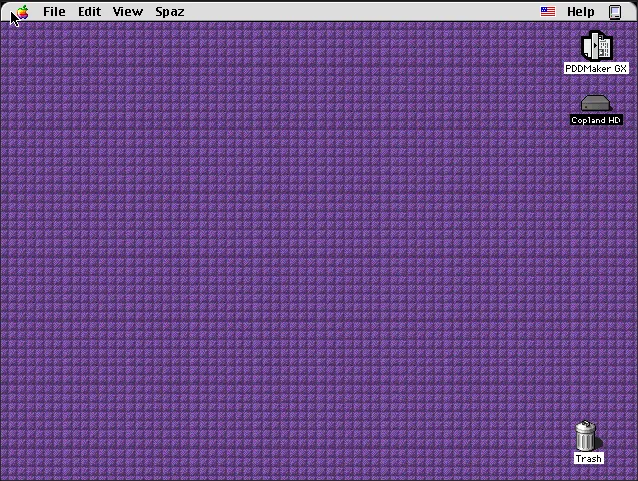
D11E4 is the final build of Copland, the operating system Apple canceled in 1996 to go buy NeXT instead. Michael Steil got it booting in a browser tab — the first time it has ever run in emulation.
Copland was supposed to be the next Mac OS: a modern, microkernel-based replacement for System 7’s aging cooperative-multitasking core, in development since 1994. It never got there. New CEO Gil Amelio brought in Ellen Hancock in 1996 to rescue the project; she concluded it would never ship. Apple canceled Copland that August and spent the rest of the year shopping for someone else’s operating system instead, choosing NeXT’s NeXTSTEP over Be Inc.’s BeOS for $427 million that December — the deal that also brought Steve Jobs back to Apple and eventually became Mac OS X.
D11E4, compiled that same June, is the last build to survive. It’s notoriously hard to run even on the real Power Macs it targeted, and until now had never booted in any emulator. Steil, who reverse-engineers old hardware at pagetable.com, took DingusPPC — an open-source Power Mac emulator that aims to model real hardware rather than patch around it, the way older emulators like SheepShaver did — and wrote eleven patches to unlock Copland’s boot path, then ported the result to WebAssembly so it runs directly inside the blog post, no download or install required.
Click the black rectangle and the tab takes over your mouse and keyboard — Escape gives them back — while the machine fetches its ROM and a roughly 34.5 MB disk image, then boots in about the 30 seconds a real 1996 Power Mac needed. Hit one of the guest OS’s own bugs mid-boot and the emulator drops into a debugger overlay with a Continue button, rather than just hanging. Land on the desktop and Copland HD is there to explore — GXSlidemaster and Eric’s Solitaire are both in the Applications folder, genuine Copland software running on the OS that was supposed to replace System 7.
It needs a fairly recent browser — Chrome or Edge 80+, Safari 16.4+, Firefox 113+, anything with DecompressionStream — and the eleven patches that make it boot live only on Steil’s own fork on GitHub. DingusPPC’s maintainers won’t merge fixes written with AI assistance, so for now the unlock stays off the emulator’s mainline, documented in commit messages for whoever wants to redo it by hand.