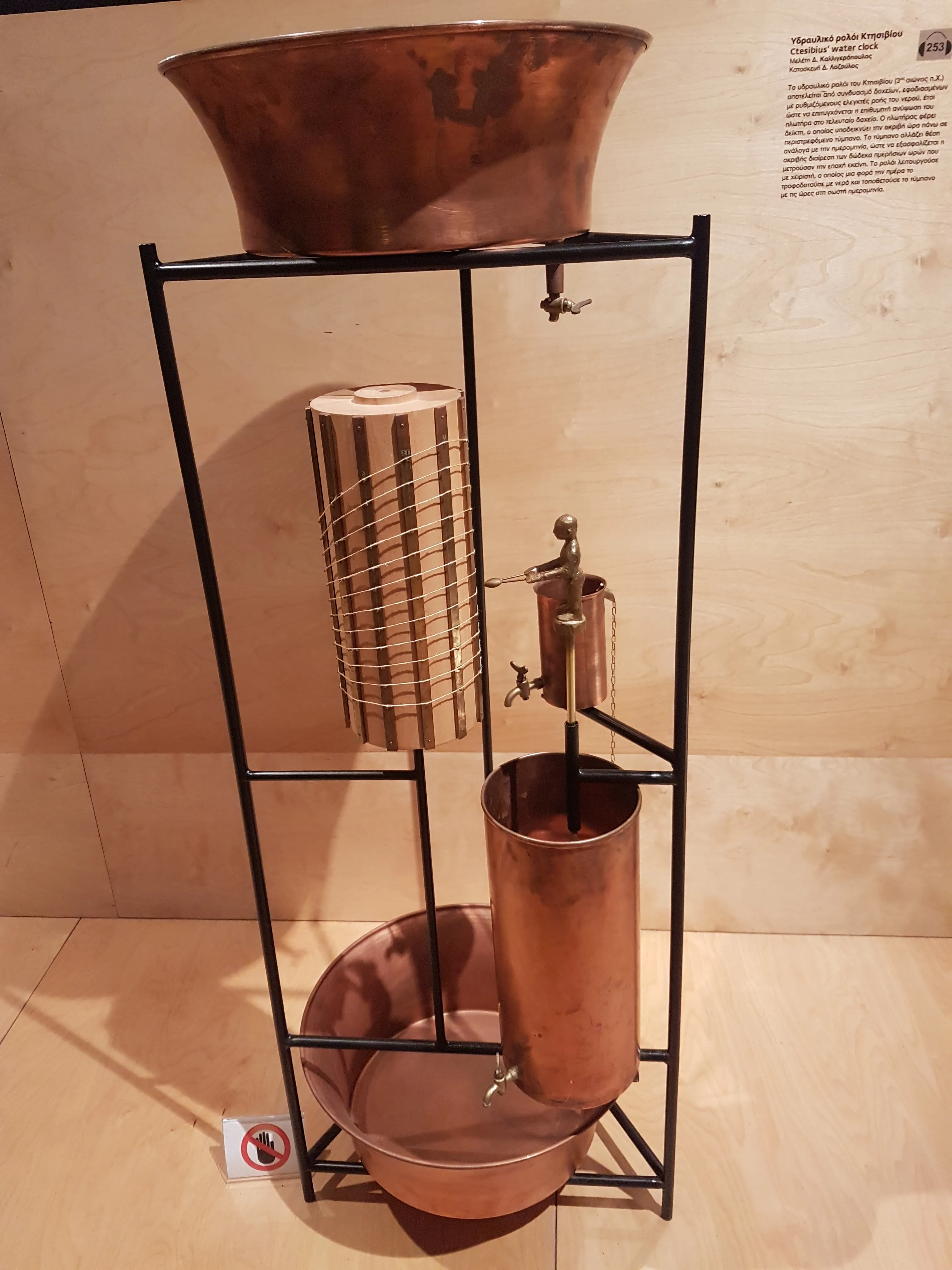
Ctesibius solved the one flaw of every water clock before his: inconsistent flow, since pressure drops as a reservoir empties. His fix, in 3rd-century-BC Alexandria, was a float valve that kept the supply vessel’s water level constant, so it dripped into the timing vessel at an unvarying rate — accurate enough that a rotating dial, marked with curved hour lines that shifted with the seasons, could read the time by eye. Nobody built a more accurate clock for roughly 1,800 years, until Christiaan Huygens added a pendulum in 1656.
Featured in: The week's catch — September 7–13